





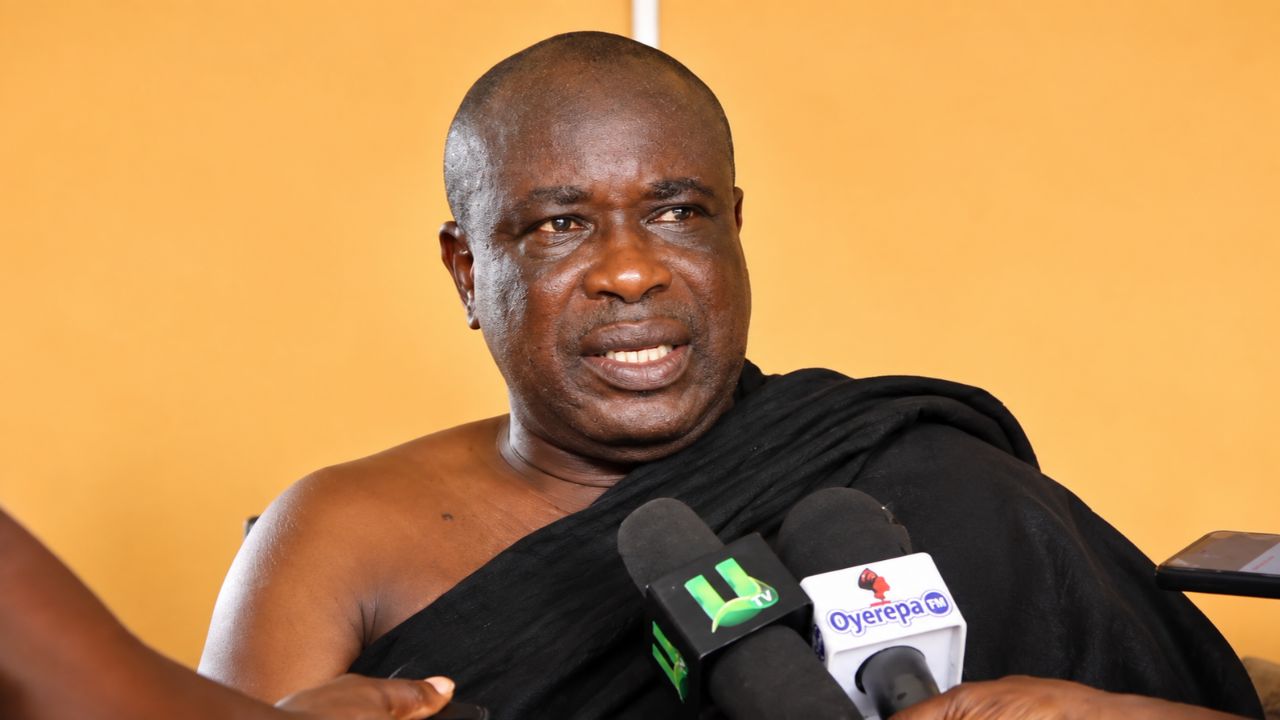
ANUM, Eastern Region — The Twafohene of the Anum Traditional Area, Nana Kwasi Adjei, has called for greater unity and collaboration among Guan communities across Ghana to accelerate development and improve the socio-economic wellbeing of their people.
According to him, the collective mobilisation of the human, cultural, natural and economic resources of Guan communities is essential to achieving sustainable and inclusive development.
Nana Kwasi Adjei made the call in an exclusive interview with the media at the close of this year’s Guan Congress, held at Anum in the Eastern Region.
The congress was held under the theme, “Harmonising Resources in Guan Communities for Inclusive and Sustainable Development.”
Nana Kwasi Adjei urged Guan traditional leaders, opinion leaders, professionals, youth and other stakeholders to use the congress as a platform to forge stronger partnerships and develop practical strategies to address the challenges confronting Guan communities.
He cautioned that the gathering should not end with participants returning to their respective traditional areas without establishing stronger bonds and a common development agenda.
He said the Guans must move beyond operating as isolated communities and instead harness their collective strengths and resources for the benefit of present and future generations.
«“We should not come to the congress and leave the same way we came — scattered across the country and isolated in our respective traditional areas. We must leave here as a united force, committed to accelerating development in our communities,” he stressed.»
The Twafohene said a united Guan front could provide a stronger platform for mobilising resources, attracting development projects, empowering young people and preserving their cultural heritage.
The Guan Congress was established in 1981, following the initiative of the late Anyenum Kwame Ampene of Anyinasu-Boso and other Guan patriots.
Its key objectives include fostering unity among the Guan people and promoting the development and preservation of the Guan language, arts and culture.
Over the years, the congress has provided a platform for traditional leaders, professionals, academics and other stakeholders to deliberate on issues affecting Guan communities and explore opportunities for their development.
Nana Kwasi Adjei therefore encouraged stakeholders to strengthen the congress and ensure that resolutions reached at the gatherings translate into concrete development initiatives at the community level.
The Twafohene also appealed to the Ministry of Education to consider making the teaching and learning of Guan languages compulsory in basic schools in areas where Guan communities are located.
He said the inclusion of Guan languages in basic education would help preserve the linguistic and cultural identity of the indigenous Guan people, particularly among younger generations.
According to him, language remains a critical component of cultural identity, and its preservation requires deliberate efforts by traditional authorities, parents, educators and the state.
He expressed concern that without sustained efforts to promote the teaching and use of Guan languages, younger generations could gradually lose touch with an important part of their cultural heritage.
Nana Kwasi Adjei called for greater collaboration between traditional authorities and educational stakeholders to develop appropriate measures to promote Guan languages, history, traditions and cultural practices.
The Twafohene further urged Guan chiefs and other community leaders to take ownership of the development agenda by working together rather than pursuing separate initiatives.
He said the resources and expertise available within Guan communities, including those of professionals living outside their traditional areas, could be harnessed to support education, healthcare, youth development, infrastructure and economic empowerment.
He also called on Guan professionals and indigenes living in Ghana and abroad to contribute their expertise, networks and resources towards the development of their communities.
He stressed that unity should not be limited to traditional leadership but should extend to all sections of Guan society.
Nana Kwasi Adjei expressed the hope that the resolutions and discussions from the Guan Congress would serve as a foundation for stronger cooperation and coordinated development among Guan communities across the country.
He said the ultimate objective should be to build a united Guan community capable of preserving its rich cultural heritage while creating sustainable opportunities for its people.

3 thoughts on “TWAFOHENE OF ANUM CALLS FOR UNITY AMONG GUAN COMMUNITIES TO ACCELERATE DEVELOPMENT”